

 How Much Does Yoga Teacher Training Cost in Canada? (2026 Honest Breakdown)
If you’re thinking about becoming a yoga teacher in Canada, the first question you probably have is: how much is this going to cost me?
It’s a fair question — and an important one. Yoga teacher training is a real investment of your time and money. The price range is wide, the quality varies, and not every program will give you what you actually need to teach confidently and build a career.
This guide breaks down the real costs of yoga teacher training in Canada in 2026. We cover everything: program types, price ranges, hidden fees, funding options, and how to figure out whether a program is worth it. No fluff. Just honest information so you can make a smart decision.
What Is Yoga Teacher Training and Why Does Cost Vary So Much?
Yoga teacher training (YTT) is a structured program that certifies you to teach yoga. Most programs follow the Yoga Alliance framework, which sets minimum hour standards for recognized certifications. The two most common are the 200-hour YTT (entry level) and the 300-hour YTT (advanced).
The price variation comes down to several factors:
Format: In-person intensives, online programs, and hybrid options all carry different costs. In-person programs require physical space, in-house teachers, and often accommodations — all of which drive up price.
Location: Costs in Vancouver or Toronto are naturally higher than in smaller cities. Rent, wages, and overhead are reflected in tuition.
School reputation: Established schools with experienced faculty charge more. Newer schools may discount tuition to build their student base.
Inclusions: Some programs bundle manuals, retreats, and mentorship into one price. Others charge separately for everything.
Duration and depth: A 200-hour intensive crammed into three weeks costs differently than the same hours spread over six months.
Understanding these variables helps you compare programs honestly — apples to apples — rather than just chasing the lowest price tag.
 The Average Cost of a 200-Hour Yoga Teacher Training in Canada
A 200-hour YTT is the standard starting point for aspiring yoga teachers. In Canada in 2026, you can expect to pay anywhere from $1,800 to $5,500 CAD for a 200-hour program. Most solid, in-person programs fall in the $2,500 to $4,000 CAD range.
Here’s a general breakdown by format:
Online-only 200-hour programs: $800 – $2,200 CAD. These are often self-paced and delivered through pre-recorded video modules. They are affordable and flexible, but they lack hands-on adjustment practice, real-time feedback, and community. Some studios don’t accept graduates of fully online programs.
Hybrid 200-hour programs: $1,800 – $3,500 CAD. These combine online theory and recorded classes with some in-person weekends or a short retreat. This model has grown significantly since 2020 and offers a reasonable balance of cost and quality.
In-person weekend programs: $2,500 – $4,500 CAD. These run over several months on weekends and are popular with working professionals. They tend to offer strong community, mentorship, and hands-on practice.
In-person intensive programs: $3,000 – $5,500 CAD. These are typically held over 3–4 consecutive weeks, often at a retreat centre. You’re immersed full-time, which accelerates learning but requires you to take time off work. Costs may include accommodation and meals.
For context, schools like Inner Yoga Training in BC, Downward Dog Yoga Centre in Toronto, and Semperviva Yoga College in Vancouver have offered 200-hour programs in the $2,800–$4,500 range, depending on the year and format.
The Cost of a 300-Hour Yoga Teacher Training in Canada
Once you’ve completed your 200-hour certification, a 300-hour advanced training takes you to the 500-hour Yoga Alliance level. In Canada, these programs typically cost $2,500 to $5,000 CAD, though some specialized programs — those focused on therapeutics, Ayurveda, or specific lineages — can reach $6,500 or more.
The 300-hour training is more specialized and often dives deeper into anatomy, sequencing, philosophy, trauma-informed teaching, and business skills. Many experienced teachers pursue it after spending a year or two teaching and gaining clarity on what they want to specialize in.
Keep in mind: not every school offers 300-hour programs. You may need to travel or train online for this level if your local school only offers the 200-hour.
Specialty and Continuing Education Costs
Beyond the core 200 and 300-hour programs, there’s a thriving market for specialty certifications in Canada. These add depth to your teaching and often allow you to serve specific populations or styles.
Common specialty training areas and their approximate costs include:
Prenatal Yoga Teacher Training: $400 – $1,200 CAD. Typically 85 hours, required for teaching prenatal classes safely. Yoga Alliance outlines requirements here.
Yin Yoga Teacher Training: $350 – $900 CAD. Often weekend-format. Focuses on long-hold passive postures and fascia theory.
Restorative Yoga Training: $300 – $800 CAD. Covers therapeutic sequencing, prop use, and nervous system regulation.
Kids Yoga Teacher Training: $400 – $1,000 CAD. Includes child development theory and age-appropriate sequencing.
Trauma-Informed Yoga Training: $500 – $1,500 CAD. Growing in demand as yoga enters healthcare and social work settings.
Aerial Yoga or Paddleboard Yoga: $500 – $1,200 CAD. Niche specialties that can differentiate your offerings.
These programs can be taken alongside your main YTT or after. They’re also common as continuing education (CE) hours, which Yoga Alliance requires registered teachers to complete to maintain credentials.
Hidden Costs You Need to Budget For
The tuition fee is only part of the picture. Many aspiring teachers are surprised by the additional expenses that come with yoga teacher training. Here’s what to budget beyond the program cost:
Yoga Alliance Registration: If you want to register as a Registered Yoga Teacher (RYT), Yoga Alliance charges an annual membership fee of approximately $65 USD per year. Registering your 200-hour credential requires a one-time application fee.
Required Reading and Textbooks: Many programs have a required reading list. Books like Light on Yoga by B.K.S. Iyengar or The Key Muscles of Yoga by Ray Long can add $50 – $150 CAD to your costs.
Props and Equipment: You may need to purchase your own yoga mat, blocks, straps, bolsters, and blankets. Budget $100 – $300 CAD for quality props if you don’t already have them.
Travel and Accommodation: If your program is held at a retreat centre or in another city, travel and lodging can add $500 – $2,000 CAD on top of tuition. Intensive programs held in remote locations (common in BC and Quebec) often factor accommodation into their fees — but not always. Read the fine print.
Liability Insurance: Once you’re teaching, you’ll need yoga teacher liability insurance. In Canada, organizations like Troika Sport or BFL Canada offer policies starting around $150 – $300 CAD per year.
Business Startup Costs: If you eventually teach independently or rent studio space, factor in business registration, marketing, and class scheduling software. These aren’t YTT costs, but they’re part of the financial picture if you plan to build a career.
A realistic total budget for your first year — including training, registration, gear, and insurance — is often $3,500 to $6,500 CAD, even if the tuition alone looks lower.
 Financing and Funding Options for Yoga Teacher Training in Canada
Yoga teacher training is generally not covered by government funding programs in Canada the way that certain vocational or trades programs are. However, there are several ways to make it more affordable.
Payment Plans: Most established schools offer payment plans. This is probably the most common way students manage the cost. Ask upfront whether there are interest charges or admin fees attached.
Early Bird Discounts: Schools frequently offer 10–20% off if you register several months in advance. If you know you want to do training, sign up early.
Alumni and Referral Discounts: If you practice at a studio that also runs a YTT program, check whether your membership earns you a loyalty discount. Some studios offer referral discounts if you bring a friend.
Bursaries and Scholarships: A small number of Canadian yoga schools and foundations offer bursaries for underrepresented communities or financial hardship. These are not widely advertised — email schools directly and ask. Organizations like Yoga Outreach in BC occasionally have support for those pursuing training to serve community populations.
Workplace Learning Credits: If you work in a wellness-adjacent field (physiotherapy, massage therapy, mental health, education), check whether your employer has a professional development budget. Some employers cover training that connects to your role.
RESP or TFSA Savings: Yoga teacher training is not RESP-eligible, but some people use TFSA savings for professional development. Worth planning ahead if you know this is your goal.
Credit Cards and LOCs: While these carry interest, some people manage tuition on a low-interest line of credit. Keep the payoff timeline realistic relative to expected teaching income.
One honest note: yoga teaching in Canada is typically a supplemental or part-time income for most teachers, particularly in early years. Factor that into your financing plan. It’s unwise to take on significant debt expecting to quickly recoup training costs through teaching income alone.
How to Evaluate Whether a Program Is Worth the Price
Price alone doesn’t tell you much about quality. Here’s how to assess whether a YTT program offers real value for what you’ll pay.
Check for Yoga Alliance registration. A Yoga Alliance-registered school (RYS) meets minimum standards for curriculum, faculty qualifications, and curriculum hours. You can search registered schools on the Yoga Alliance website. This doesn’t guarantee quality, but it sets a baseline.
Look at the lead teachers’ credentials and experience. Who is actually teaching the program — and how long have they been teaching? Some schools market with a well-known lead teacher but deliver most training through junior instructors. Ask who will deliver what percentage of the training hours.
Read graduate testimonials carefully. Generic five-star reviews tell you little. Look for specifics: Did graduates feel prepared to teach? Did they feel supported after graduation? Where are they teaching now?
Ask about post-graduation support. Does the school offer mentorship after you finish? Can you observe classes? Do they have a community or alumni network? These things matter when you’re starting out.
Understand what’s included. Get a detailed breakdown of what the tuition covers. Some schools include a manual, retreat, and community platform. Others charge extra for all of it.
Assess the curriculum balance. A strong 200-hour YTT covers asana (postures), anatomy and physiology, pranayama (breathwork), meditation, yoga philosophy, teaching methodology, and practicum hours. Be skeptical of programs that are heavily asana-focused and light on everything else.
Consider the community. You’ll spend hundreds of hours with your cohort. Talk to current or past students. The relationships you build in training often become the support system that sustains your teaching life.
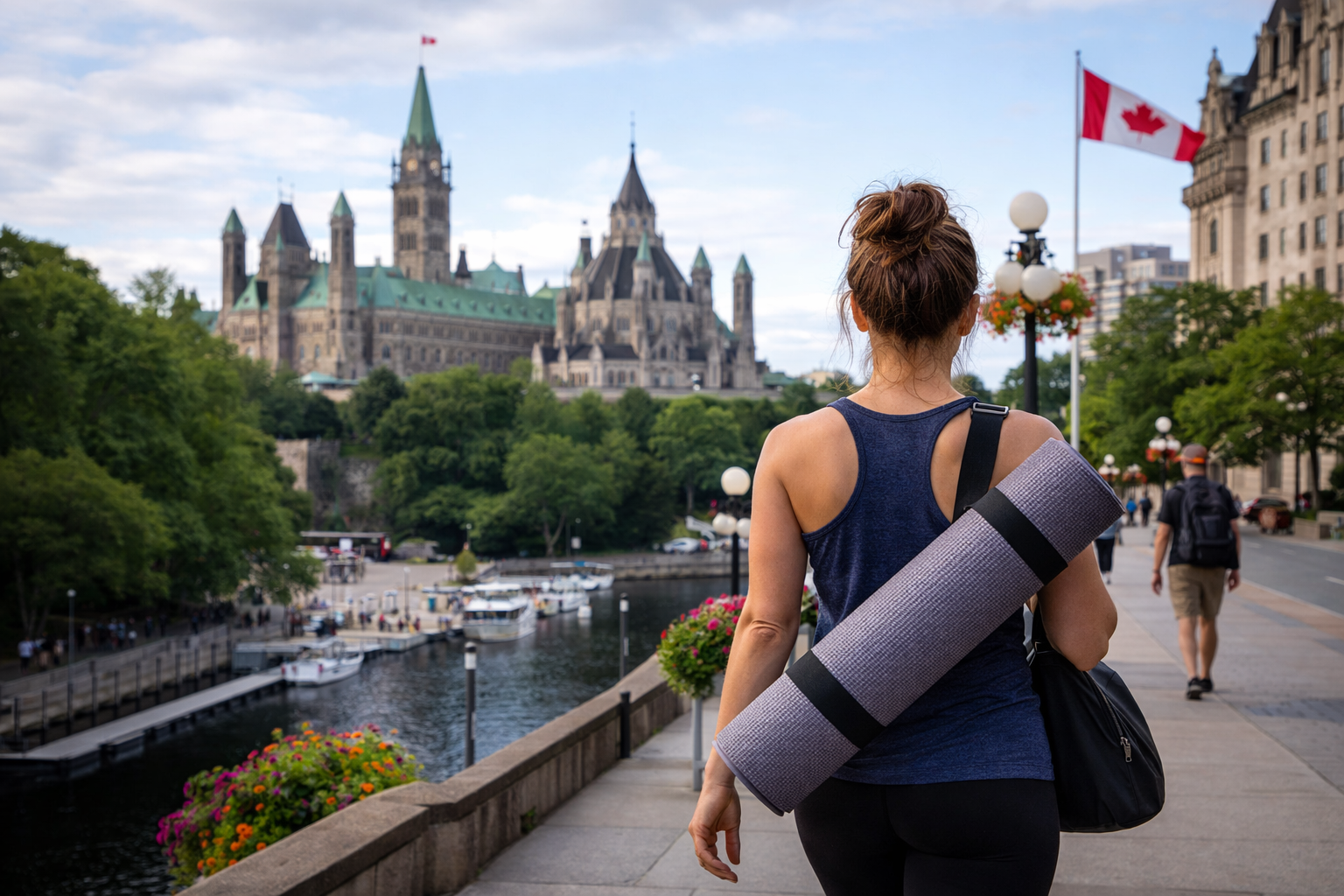 Canada vs. International Training: Is It Worth Going Abroad?
Some Canadian yoga students consider training abroad — in India, Bali, Costa Rica, or Thailand — where intensive programs are often cheaper in local currency. A 200-hour program in Rishikesh, India can cost $1,200 – $2,500 USD, potentially including accommodation and meals.
On the surface, this looks like a bargain. But factor in return flights ($1,500 – $2,500 CAD from most Canadian cities), travel insurance, vaccinations, and time off work. The gap narrows quickly.
There are real benefits to training abroad: immersive cultural context, traditional lineages, and dedicated study time free from daily distractions. These have genuine value. But so do training close to home: an established community, teachers you can return to for mentorship, and integration into the local yoga scene where you’ll likely teach.
If you’re drawn to training in India specifically, Sivananda Yoga Vedanta Centres offer an internationally respected curriculum — and they have a centre in Quebec City, making their lineage accessible right here in Canada.
Neither path is objectively better. It depends on your budget, your goals, and how you learn best.
What to Expect After You Graduate: Teaching Income Reality Check
This section isn’t about cost — it’s about context. Understanding what yoga teachers earn in Canada helps you calibrate how to think about your training investment.
In Canada, yoga teacher pay varies considerably by setting:
Studio drop-in rates for teachers: $25 – $60 CAD per class, depending on the studio and city. Some studios pay per head (per student), which at small class sizes can be $20 or less.
Corporate wellness yoga: $75 – $150 CAD per session. Higher pay, but requires finding and retaining corporate clients.
Private clients: $80 – $150 CAD per hour. More lucrative but requires marketing and relationship-building.
Online teaching: Revenue varies widely. Building a subscription or digital course income takes time and consistent effort.
Canadian Fitness Professionals (canfitpro) notes that many fitness and wellness instructors in Canada work part-time or combine studio work with private clients and corporate contracts to build a sustainable income.
Most working yoga teachers in Canada earn between $25,000 and $55,000 CAD annually, with those running studios, large online followings, or high corporate client loads earning more. Teaching yoga full-time in Canada is possible — but it takes time, strategy, and often multiple income streams.
This is relevant to your training investment because it shapes what makes financial sense. Spending $5,000 on training while planning to teach two drop-in classes per week may take years to recoup. Spending that same amount while planning to build a full teaching career makes much more sense financially.
 How to Choose the Right Program for Your Budget
Here’s a simple decision framework to help you find the right training at the right price.
If your budget is under $2,000 CAD: A quality online or hybrid program is your best option. Look for one with live sessions, mentorship components, and strong reviews. Avoid purely self-paced programs with no teacher interaction. You can always follow up with in-person trainings or workshops later.
If your budget is $2,000 – $3,500 CAD: You have access to most weekend-format in-person programs across Canada. Look for established schools with experienced faculty and strong graduate communities.
If your budget is $3,500 – $5,500 CAD: You can choose from most in-person intensive or comprehensive programs, including some retreat-based trainings. At this range, be especially thorough in your research — the price doesn’t guarantee quality.
If budget is flexible: Focus entirely on fit — faculty experience, curriculum depth, community, and alignment with your teaching values. Cost matters less than whether the training will genuinely prepare you to teach.
In all cases: visit the school (in person or virtually), speak with graduates, and trust your instincts about the culture of the program.
Conclusion: How Much Does Yoga Teacher Training Cost in Canada? (2026 Honest Breakdown)
So, how much does yoga teacher training cost in Canada in 2026? Here’s the honest answer:
A 200-hour YTT will cost you $1,800 to $5,500 CAD depending on format, location, and school. Most quality in-person programs fall between $2,500 and $4,000 CAD. A 300-hour advanced training adds another $2,500 to $5,000 CAD. Specialty certifications range from $300 to $1,500 CAD depending on the focus.
When you factor in Yoga Alliance registration, props, books, insurance, and any travel, budget $3,500 to $6,500 CAD for your first year as a newly certified teacher.
The most important takeaway: don’t make your decision on price alone. The cheapest program is not automatically the worst — and the most expensive is not automatically the best. Research the faculty, the curriculum, the graduate outcomes, and the culture of the school. That’s where the real value lives.
Yoga teacher training is a meaningful investment in yourself and in the service you’ll offer others. Go in clear-eyed about the costs, realistic about the income timeline, and genuinely excited about the path ahead.