 How Hard Is 200-Hour Yoga Teacher Training? Exams, Assignments & Passing Requirements in Canada (2026)
You love yoga. You want to teach it. Then a worry creeps in. How hard is 200-hour yoga teacher training, really? Will you face tough exams? Will you fail?
This guide answers those questions. It explains How Hard Is 200-Hour Yoga Teacher Training? Exams, Assignments & Passing Requirements in Canada (2026) in plain language. You will learn what the training covers, how schools test you, and what it takes to graduate. You will also find tips to prepare and questions to ask before you enrol.
One note first. Every school sets its own grading rules. Use this article as a general map. Then confirm the details with the school you choose.
The Short Answer: How Hard Is It?
Most students find 200-hour training challenging but manageable. It is not a university degree. It is also not a weekend workshop. It sits in between.
The difficulty comes from volume, not from complex theory. You study many topics in a short time. You practise daily. You read, write, and teach. You also face your own habits, fears, and limits. Many students say the emotional side surprises them more than the academic side.
Three factors shape how hard you will find it.
Your schedule. An intensive month-long program packs the work into long days. A part-time program spreads it across several months. Intensives feel harder because you have less time to rest and absorb. Part-time programs ask for steady effort over a longer period.
Your background. Experienced practitioners often find the physical side easy. They may struggle more with anatomy terms or public speaking. New practitioners may find the opposite. Neither group has a clear advantage.
Your school. Some programs grade lightly. Others test carefully. A well-run program should challenge you. It should also give you the support you need to succeed.
Here is the good news. Most students who attend regularly, finish their work, and practise teaching will graduate. Schools want you to pass. They also want you to teach safely. Those two goals shape most passing requirements.
What 200-Hour Training Means in Canada
The “200 hours” comes from Yoga Alliance. This is the largest international yoga teacher registry. It sets education standards for schools around the world, including Canadian ones.
Here is a fact that surprises many people. Canada does not license yoga teachers. No federal or provincial government body requires a certificate to teach yoga. You do not need government approval to lead a class.
So why does the 200-hour standard matter? Because most studios, gyms, and insurance providers expect it. Employers want proof that you completed a structured program. A recognized certification gives them a benchmark.
The path works in two steps. A school registers with Yoga Alliance as a Registered Yoga School (RYS). You then complete that school’s 200-hour program. After graduation, you can apply to Yoga Alliance for your own credential, called Registered Yoga Teacher (RYT). Registration is voluntary. It also involves a fee, so check the current terms on the Yoga Alliance website.
Yoga Alliance describes the purpose of its standards as supporting safe, accessible, and equitable yoga teaching. You can read its stated principles on its Spirit of the Standards page. That aim explains why training includes anatomy, ethics, and teaching practice. It is not only about doing poses.
One more point matters here. Yoga Alliance sets the hour and content requirements. It does not set your school’s grading rules. Your school decides how it tests you and what you must do to pass. That is why programs can feel so different from each other. If you are comparing options, start by browsing the full range of yoga teacher training programs and note which credential each one leads to.
What You Actually Study
Under the current RYS 200 standards, which took effect on February 27, 2020, Yoga Alliance groups the curriculum into four educational categories. According to Yoga Alliance’s published standards, the new credential also counts all 200 hours as classroom hours. The older system split hours into contact and non-contact time. Some programs that have not yet updated may still use the older system.
The four categories are:
- Techniques, Training, and Practice. You learn postures, breathing methods, meditation, and sequencing. You also learn how to cue, adjust, and modify poses for different bodies.
- Anatomy and Physiology. You study the muscles, joints, and nervous system. You learn which movements carry risk. You also learn how breath affects the body.
- Yoga Humanities. You explore yoga’s history, philosophy, and ethics. Many programs study texts such as the Yoga Sutras. You also discuss how to teach with respect for yoga’s roots.
- Professional Essentials. This category covers the craft and business of teaching. It includes teaching methodology and practicum, which is supervised practice teaching. It often covers class planning, communication, and teacher ethics.
Each category challenges people differently. The physical practice tests your stamina. Anatomy tests your memory. Philosophy tests your patience with new ideas. Teaching practice tests your confidence.
Many students find anatomy the most intimidating. The vocabulary feels new. Yet most programs teach it at a practical level. You do not need to become a physiotherapist. You need to understand enough to keep your students safe.
If the vocabulary worries you, start early with a yoga terms glossary. If philosophy interests you, a primer on the Yoga Sutra offers a gentle starting point. Even a few chapters of reading before day one will help.
The Daily Workload: Time, Energy, and Stamina
Numbers help here. Two hundred hours is a lot of time. In an intensive format, you might train six days a week for about four weeks. Days often run from early morning to early evening. They usually mix practice, lectures, discussion, and teaching.
Yoga Alliance limits how much instruction a school can pack into one day. Its policy allows no more than 14 instructional hours per day. Most programs schedule far fewer. Still, even a normal day feels full.
Expect a rhythm like this. You may start with meditation or breathwork. Then you practise a physical class. After a break, you study anatomy or philosophy. In the afternoon, you practise teaching. Evenings often include reading or short writing tasks.
The physical demand varies. You do not need advanced poses to succeed. But daily practice tires the body. Sore wrists, hips, and shoulders are common. Rest and nutrition matter more than most people expect.
Mental fatigue is just as real. You absorb new ideas all day. You also give and receive feedback. Many students feel emotional by the second week. That reaction is normal. Long hours of stillness and self-reflection can bring up strong feelings.
Part-time programs reduce the daily load. They often run on weekends or evenings over several months. The trade-off is time. You must balance training with work and family. You also need discipline to keep studying between sessions.
Health organizations recommend regular movement and rest for adults. The Canadian 24-Hour Movement Guidelines from the Canadian Society for Exercise Physiology discuss how activity, sleep, and sedentary time fit together. Training works better when you respect those basics. Sleep well, eat well, and listen to your body.
Exams: What to Expect
Many students ask first about exams. The honest answer is that it depends on the school. Yoga Alliance does not publish one standard test for all programs. Each school designs its own assessments.
Most programs use a mix of these formats:
- Written quizzes or a final exam. These often cover anatomy, philosophy, and teaching principles. Questions may be multiple choice, short answer, or both.
- Practical assessments. You may demonstrate poses, give cues, or lead a short sequence. A teacher watches and gives feedback.
- Oral check-ins. Some schools ask you to explain a concept aloud or discuss how you would help a student with a specific injury.
Many programs keep exams reasonable. The goal is to confirm that you understand the material. It is not to trick you. Open-book or take-home formats are common in some programs. Others use closed-book tests for anatomy.
Here is what tends to feel hardest. Students often struggle with Sanskrit terms and muscle names. Memorizing them takes repetition. Flashcards, diagrams, and quick daily reviews work well. Try saying the names aloud while you move. That connects the word to the feeling.
Also expect the exam to test judgment. A good question might ask what you would do if a student reports shoulder pain in a pose. You need to apply what you learned. Memorizing alone will not be enough.
Ask your school how it grades. Find out whether there is a minimum score. Ask what happens if you fall short. Many schools allow retakes or extra study. A supportive policy tells you a lot about the program.
Assignments: Reading, Writing, and Reflection
Assignments fill much of your time outside class. They are usually the part students underestimate. The tasks are not hard individually. Together, they add up.
Common assignments include:
- Reading. You may read books on yoga philosophy, anatomy, or teaching. Reading lists vary from a few titles to many.
- Written reflections. You might write about what you learned in practice or how a text applies to modern life. These are often short essays.
- Sequence plans. You design a class from start to finish. You choose poses, timing, and cues. You also explain why you built it that way.
- Journals. Some programs ask for a daily practice log. This builds self-awareness.
- Case studies. You may describe how you would adapt a class for a specific student, such as someone with tight hips or limited mobility.
Under the older Yoga Alliance system, written assignments on yoga-related topics could count as non-contact hours in most categories. Under the newer RYS 200 credential, all 200 hours are classroom hours. Because of this change, programs now build more of the work into class time. Still, many schools assign homework as well.
Here is practical advice. Do not leave assignments until the last night. Short daily sessions work far better. Write a few sentences after each class while the lesson is fresh. This habit keeps the work from piling up.
Be honest in reflections. Teachers can tell when you write what you think they want to hear. Specific details and real doubts make better answers. They also help you learn.
Grading on assignments is often generous. Most schools care more about effort and understanding than perfect writing. If English is your second language, ask whether the school offers support. Many teachers will gladly accept simple, clear answers.
 Practicum: Learning to Teach
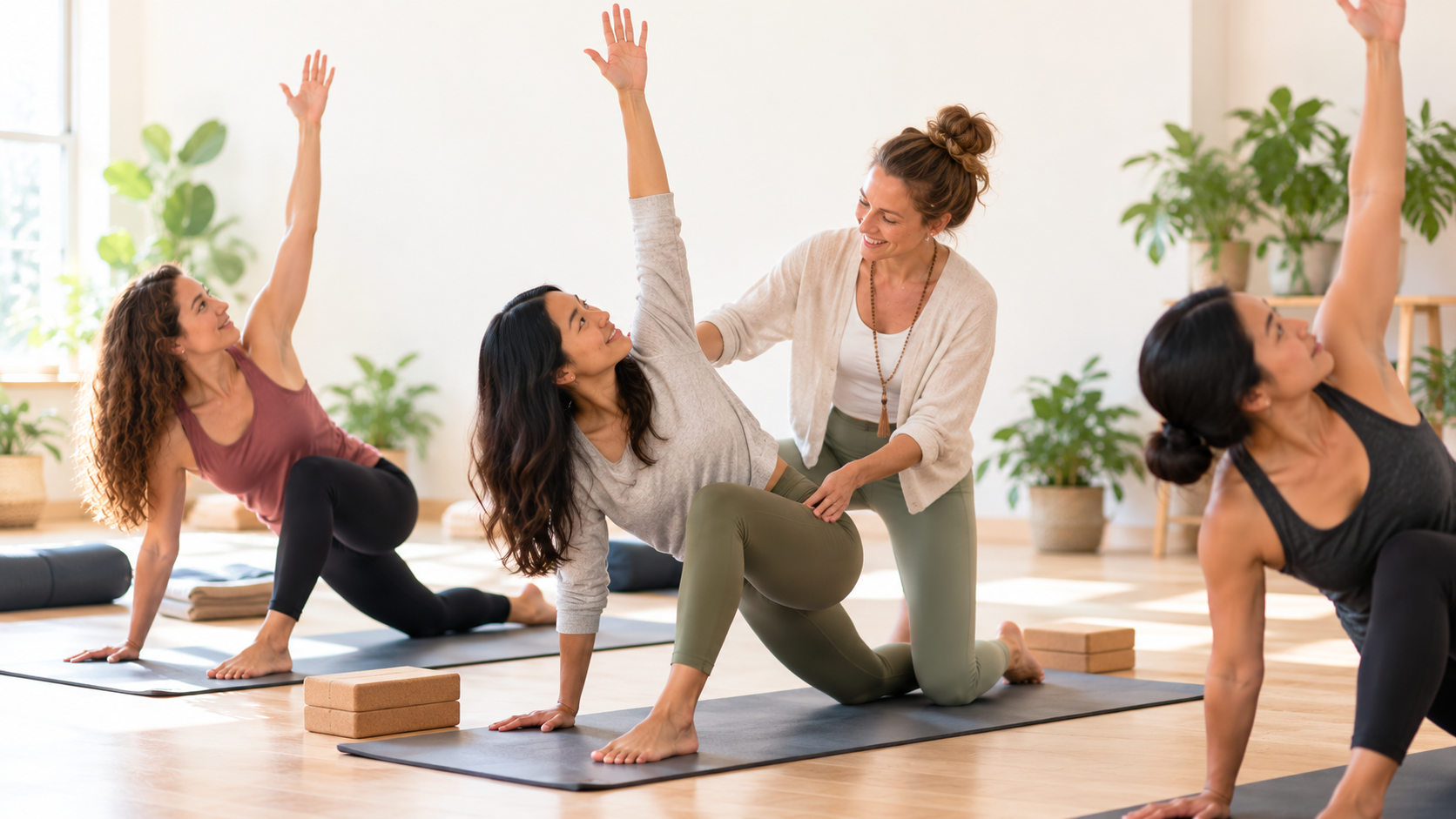
The practicum is where training becomes real. You stop being only a student. You start teaching.
Under the current RYS 200 standards, the practicum sits within the Professional Essentials category. It means supervised practice teaching. You lead classmates through poses, give cues, and receive feedback.
Most students find this the scariest part. Standing in front of a group feels exposed. Your voice may shake. You may forget the next pose. Almost everyone experiences this. Teachers expect it.
Practice teaching usually grows in stages. You may start by teaching one pose to a partner. Next, you teach a short sequence to a small group. By the end, you may lead a full class of an hour or more. This gradual build helps nerves settle.
Teachers give feedback on several things. They may look at:
- Clear, simple cueing
- Safe alignment guidance
- Pacing and sequencing
- Voice and presence
- How well you notice and respond to students
Feedback can sting at first. Try to treat it as information. Every teacher you admire once stumbled through their first class.
Here is a useful trick. Record yourself during practice, if your school allows it. Listen back. You will hear filler words and rushed cues you did not notice. Small fixes then make a big difference.
For cueing practice, a yoga pose library is a handy reference. Pick one pose each day. Write a short, safe cue for it. Say it aloud as if you were teaching.
Remember, the practicum is not a performance test. It is a skill-building process. Schools generally want to see progress, not perfection.
Passing Requirements: What It Takes to Graduate
Passing 200-hour training rarely depends on one big exam. Instead, schools look at several things together. Most use some version of the following.
Attendance. Because the program is built around 200 hours of instruction, schools expect you to be present. Many allow only a small number of missed hours. If you miss more, you may need to make up the time through extra sessions or private study. Some schools charge for makeup work. Ask about this policy early.
Participation. Teachers watch your engagement. Do you take part in practice? Do you join discussions? Do you try the teaching exercises? Active effort counts.
Assignments. You must usually complete all required work. Missing assignments can hold up your certificate. Late work is often accepted with a penalty or a short extension.
Assessments. You may need to reach a minimum score on written or practical tests. Some schools use a simple pass or fail grade. Others use percentages.
Practice teaching. You typically need to complete the required teaching sessions and show safe, clear instruction.
Payment and paperwork. Some schools require full payment and signed forms before issuing a certificate. These details are administrative, but they matter.
Students sometimes fail or must repeat part of the course. The usual causes are heavy absences, unfinished assignments, or safety concerns in teaching. Low exam scores are less common reasons. Schools usually offer a path to recover, such as extra study or a retake. Ask about it before you pay.
Once you complete the program, your school issues a certificate. If you want Yoga Alliance registration, you can then apply for it. Yoga Alliance’s standards document explains how credentials and requirements are organized. You can review it in the Standards for RYS Credentials PDF.
Check one more thing before you enrol. Confirm which organization certifies the program and which credential you will earn. If you plan to register with Yoga Alliance, verify that the school is a Registered Yoga School in the Yoga Alliance directory. A certificate from a school outside that system may not qualify you for registration.
Online vs. In-Person: Does Format Change the Difficulty?
Format changes how hard training feels. It does not change what you must learn.
Yoga Alliance’s current policy allows up to 40 of the 200 hours to be delivered online under the new RYS 200 credential. The other hours must be in a classroom setting. Programs with an older credential follow different rules, so always confirm with the school. You can read the current policy on the Yoga Alliance hours policy page. Other certifying bodies may set different rules for online delivery. Ask each school how it handles this.
In-person training offers hands-on feedback. Teachers can adjust your posture and watch you teach. You also form close bonds with classmates. The downside is cost, travel, and time away from home.
Online study offers flexibility. You can study from your living room in any province. You can pause and rewatch lectures. Anatomy and philosophy often work well online. The downside is self-discipline. No one is there to nudge you. Screen fatigue can also wear you down.
Hybrid programs blend both. They often put lectures online and keep practice and teaching in person. Many students like this balance.
Which format is hardest? It depends on you. Some people struggle with motivation at home. Others struggle with the intensity of in-person days. Think about how you learn best. If you want to see what a remote option looks like, review the foundational yoga courses available online.
Budget matters too. Ask every school for the full fee in writing. Find out what it covers, including books, makeup sessions, and certificates.
How to Prepare Before Day One
Good preparation makes training far smoother. You do not need to be an expert. A few simple habits help.
Build a steady practice. Practise several times a week for at least a few months. This prepares your body for long days. It also teaches you what you need.
Start reading early. Pick up one book on anatomy and one on yoga philosophy. Even a few chapters give you a head start. Your school may send a reading list. Begin it right away.
Learn the basics of breathwork. Pranayama appears in nearly every program. Explore a pranayama resource library and try one technique each day. Notice how each one feels. That firsthand experience will help you explain it later.
Practise speaking. Cue a pose out loud while you practise at home. Teach a friend or family member. Public speaking improves with repetition.
Plan your life around training. Tell your employer and family about your schedule. Arrange childcare or time off if needed. Stress outside class makes training harder.
Set realistic expectations. You will not feel like a perfect teacher at graduation. You will feel like a beginner teacher. That is exactly right. Real skill grows through teaching actual classes.
Take care of your body, too. Eat enough, sleep well, and stretch gently. Avoid pushing through pain. Training is not a contest.
 Questions to Ask Before You Enrol
Do not leave the hardest questions unasked. A good school answers clearly and without defensiveness. Consider asking:
- Which organization certifies the program? Does it qualify me for Yoga Alliance registration if I want it?
- How many of the 200 hours are online, and how many are in person?
- How are students assessed? Which exams, assignments, and teaching tasks are required?
- What is the attendance policy? What happens if I miss a session?
- What happens if I do not pass a component? Can I retake it?
- Who are the lead trainers? What is their experience?
- What does the full fee cover? Are books, makeup sessions, or certificates extra?
- What support exists for students who struggle?
Listen to how the school answers. Clear, specific answers suggest a well-run program. Vague replies are a warning sign. If a school promises that everyone passes without effort, be cautious. Good training should challenge you a little.
You can research many of these answers yourself. Look at the school’s training faculty to see who teaches and what experience they have. Read student testimonials to learn what graduates found hard and rewarding. Then contact the school with your remaining questions. Honest experiences tell you more than any brochure. Ask what surprised graduates and what they wish they had known.
Conclusion: So, How Hard Is It?
Let us return to the big question. How Hard Is 200-Hour Yoga Teacher Training? Exams, Assignments & Passing Requirements in Canada (2026) has a balanced answer. The training is demanding, but most committed students can complete it. The challenge comes from long hours, new subjects, and learning to teach. It does not come from impossible exams.
Here is the main takeaway. You pass by showing up, doing the work, and practising your teaching. Schools set their own exams and rules, and Canada has no government licence for yoga teachers. So choose a reputable school, confirm which credential you will earn, and ask your questions first. If you prepare well and stay consistent, you can succeed.
If you are ready to become a yoga teacher, check out our 200-hour yoga teacher training online program and take the next step.